TERMINALE LV1 · UPPER SECONDARY · B2 to C1 · C1/C2 extension track in every session
Session 5: Act V: guilt, sleepwalking and the end
Part 5. How does Shakespeare show the collapse of the Macbeths?
Objectives
- Analyse the sleepwalking scene (prose) and the 'Tomorrow' soliloquy (verse)
- Study the image of life as theatre
- Assess the final judgement on the Macbeths
Warm-up
Image analysis. Look at the painting for one minute in silence.
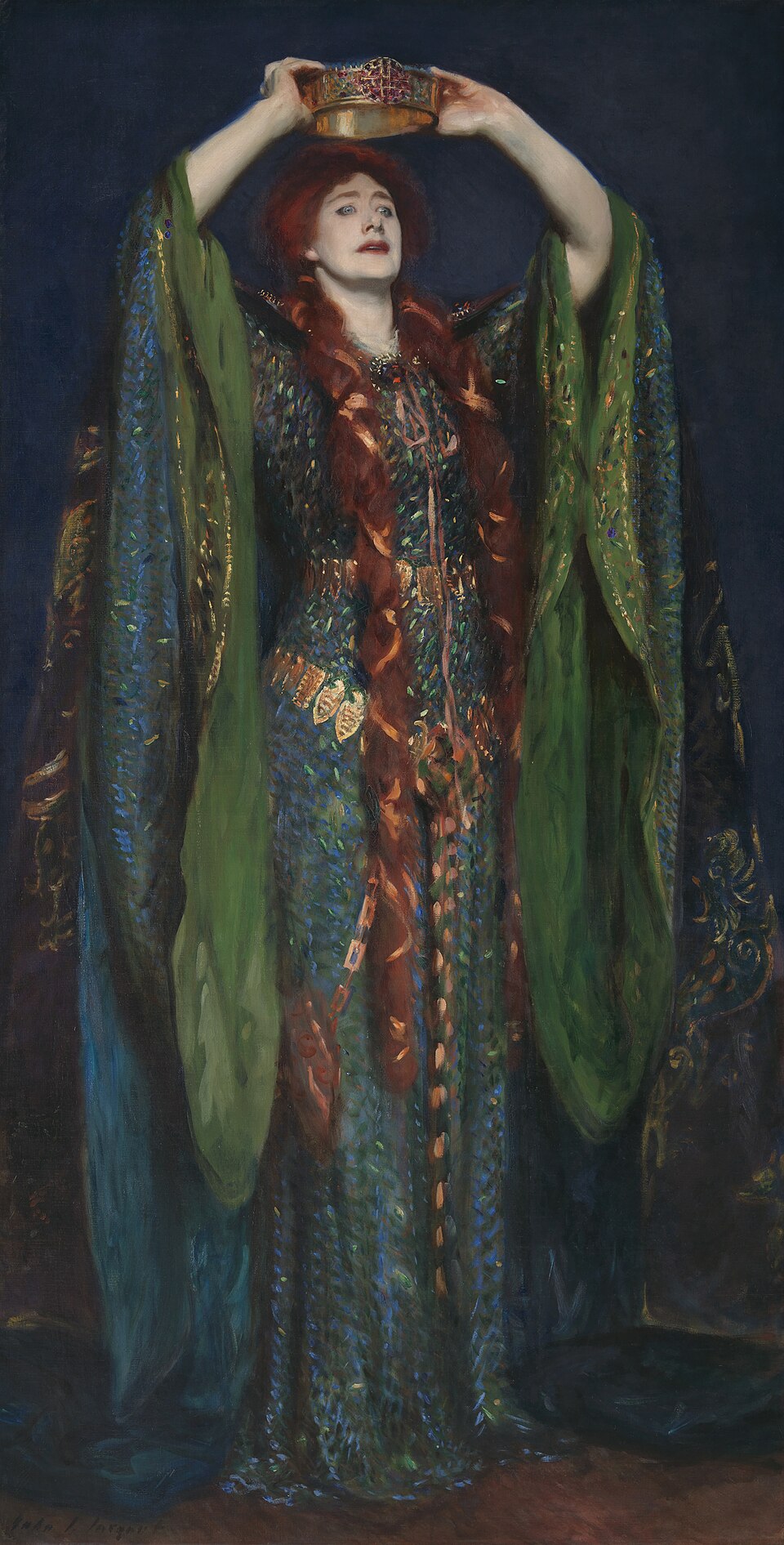
- Ellen Terry was a famous actress of the Victorian stage. How does Sargent present Lady Macbeth here: queen, victim, villain?
- Look at the colours and the crown. What does she seem to feel?
- Compare her with the Lady Macbeth of Fuseli.
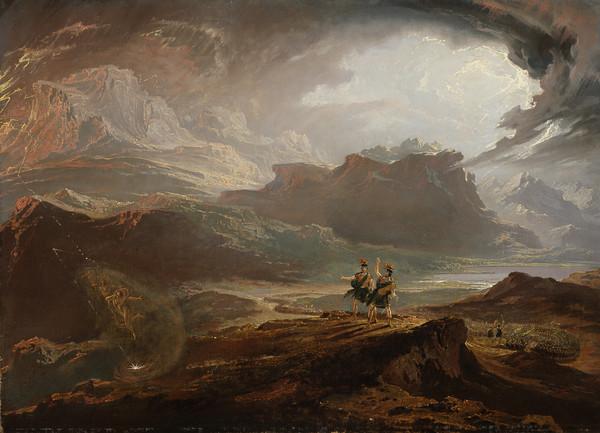
Documents
Out, damned spot! out, I say!
William Shakespeare, Macbeth, Act V, Scene 1, Lady Macbeth, sleepwalking
William Shakespeare, Macbeth, Act V, Scene 1, Lady Macbeth, sleepwalking
Glossary: damned: cursed · spot: a stain of blood
What's done cannot be undone.
William Shakespeare, Macbeth, Act V, Scene 1, Lady Macbeth
William Shakespeare, Macbeth, Act V, Scene 1, Lady Macbeth
To-morrow, and to-morrow, and to-morrow,
Creeps in this petty pace from day to day
To the last syllable of recorded time
William Shakespeare, Macbeth, Act V, Scene 5, Macbeth
William Shakespeare, Macbeth, Act V, Scene 5, Macbeth
Glossary: petty pace: small slow steps · syllable: part of a word
Out, out, brief candle!
Life's but a walking shadow, a poor player
That struts and frets his hour upon the stage
And then is heard no more: it is a tale
Told by an idiot, full of sound and fury,
Signifying nothing.
William Shakespeare, Macbeth, Act V, Scene 5, Macbeth
William Shakespeare, Macbeth, Act V, Scene 5, Macbeth
Glossary: brief: short · player: actor · struts and frets: walks proudly and worries · fury: anger
Lay on, Macduff,
And damn'd be him that first cries, 'Hold, enough!'
William Shakespeare, Macbeth, Act V, Scene 8, Macbeth
William Shakespeare, Macbeth, Act V, Scene 8, Macbeth
Glossary: lay on: attack · hold: stop
this dead butcher and his fiend-like queen
William Shakespeare, Macbeth, Act V, Scene 8, Malcolm
William Shakespeare, Macbeth, Act V, Scene 8, Malcolm
Glossary: butcher: a man who kills animals for meat · fiend-like: like a devil
Activities
- The sleepwalking scene is written in prose. Why might Shakespeare abandon verse for Lady Macbeth here?
- "What's done cannot be undone": compare with Act III, where she said the opposite. What has changed?
- "Tomorrow, and tomorrow": repetition, rhythm, the metaphors of the candle, the shadow, the actor. What is Macbeth's vision of life?
- Malcolm's final words: "dead butcher" and "fiend-like queen". Is this judgement fair?
- Intermediary task (oral): perform the "Tomorrow" soliloquy in groups of three, each one taking two lines.
Sentence starters
- The shift to prose suggests...
- The repetition of 'tomorrow' conveys...
- Life is compared to... because...
- Malcolm's judgement is too simple because...
- In the end, Macbeth...
Role play
Pairs: the Doctor and the Gentlewoman after the sleepwalking scene. What should they tell, and to whom? Is it safe to speak?
Gap-fill worksheet

Word bank: sleepwalking, prose, nihilism, metaphor, remorse, tyrant, downfall, judgement
- Lady Macbeth walks in her sleep: ______.
- She speaks in ______, not in verse.
- Her ______ makes her see blood on her hands.
- "Life's but a walking shadow" is a ______.
- The idea that life means nothing is ______.
- Macbeth's ______ is complete at the end.
- Malcolm calls Macbeth a ______ and a butcher.
- Malcolm's final ______ is very harsh.
Answer key
- sleepwalking
- prose
- remorse
- metaphor
- nihilism
- downfall
- tyrant
- judgement
Homework
Write the plan of your final essay: introduction, three parts with quotations, conclusion.
Watch the film at home
- The Tragedy of Macbeth (2021), directed by Joel Coen, with Denzel Washington and Frances McDormand, in black and white. Where to watch: JustWatch France.
- Macbeth (2015), directed by Justin Kurzel, with Michael Fassbender and Marion Cotillard. Where to watch: JustWatch France.
- DVD: ask at your local library or médiathèque.
- Scenes to watch: the witches on the heath (Act I), the dagger and the murder of Duncan (Act II), the banquet and Banquo's ghost (Act III), the sleepwalking scene (Act V).
Watch with English subtitles if you can. The films contain violence.
Assessment grid
| Criteria | Level 1 | Level 2 | Level 3 | Level 4 |
|---|---|---|---|---|
| Analysis | Paraphrase | Some analysis | Clear analysis | Subtle, well supported analysis |
| Performance | Flat | Some expression | Expressive | Moving and well paced |
| Argument | Unclear | Simple | Organised | Organised and personal |
| Language | Many errors | Some errors | Few errors | Accurate and varied |
Terminale LV1 · C1/C2 extension track
For strong or anglophone students. The end: nihilism or moral order?
Extended extract
Life's but a walking shadow, a poor player
That struts and frets his hour upon the stage
And then is heard no more. It is a tale
Told by an idiot, full of sound and fury,
Signifying nothing.
William Shakespeare, Macbeth, Act V, scene 5 (public domain)
That struts and frets his hour upon the stage
And then is heard no more. It is a tale
Told by an idiot, full of sound and fury,
Signifying nothing.
William Shakespeare, Macbeth, Act V, scene 5 (public domain)
Critical analysis
- How does the theatre metaphor turn back on the audience?
- Is this the play's message or Macbeth's despair?
- Does Malcolm's victory restore meaning?
Nuanced vocabulary
| Word or phrase | Meaning and use |
|---|---|
| nihilism | the belief that life has no meaning |
| metatheatre | theatre that refers to itself |
| restoration of order | the return to legitimate rule at the end |
| arguably | to present a view as defensible but open to debate |
| to hinge on | to depend entirely on |
Argued writing (C1: 300 words · C2: 400 words)
Essay: 'To what extent is Macbeth responsible for his own downfall?' (C2: include a critical reading).
Debate
Formal debate: Fate, not ambition, destroys Macbeth.